
Man, Disinhibited
We're all one bad day away. Spoiler analysis for Garth Ennis' Crossed and 28 Years Later: The Bone Temple

I’m terrified of other people.
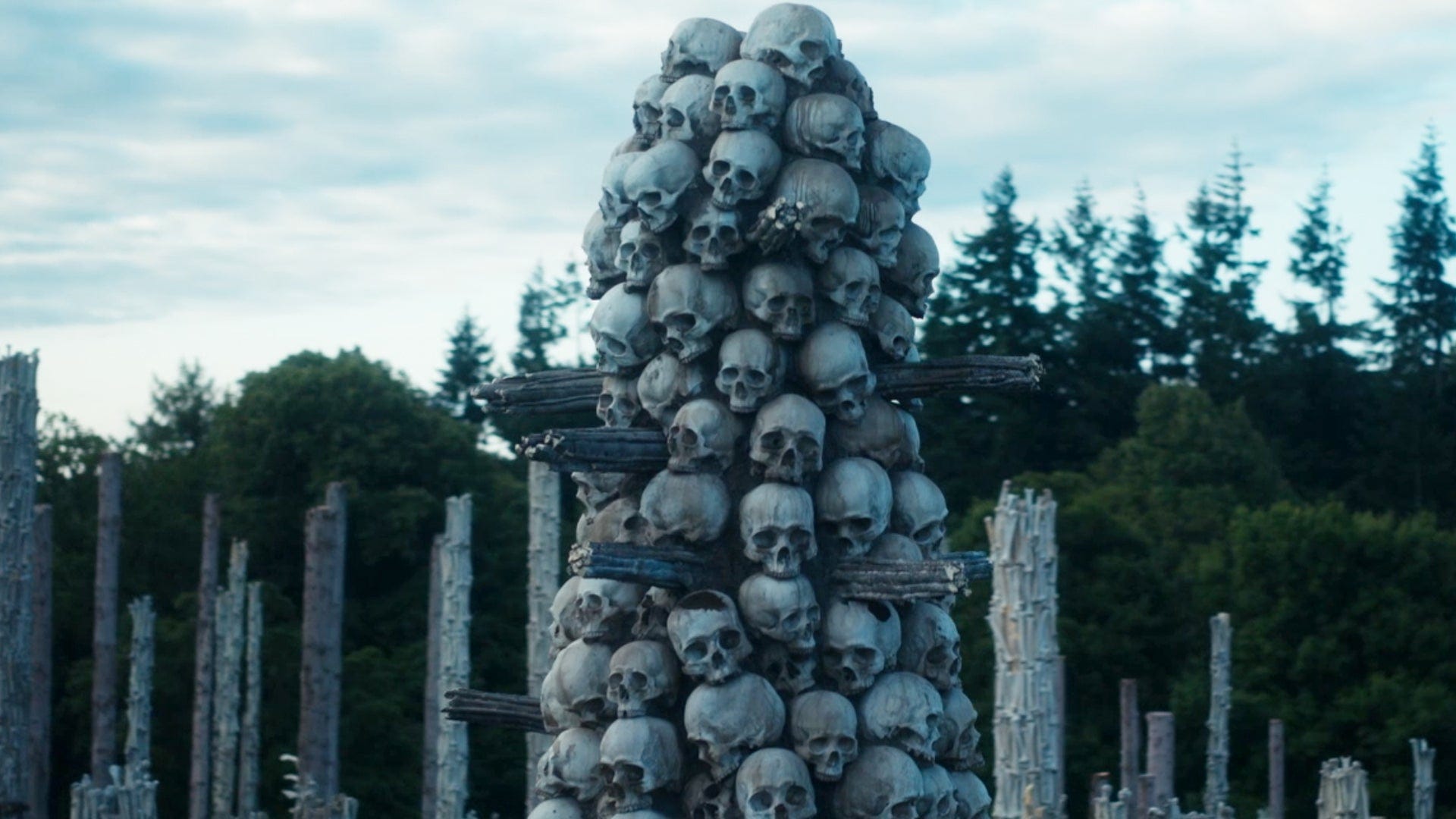
I’ve been plagued by this fear since childhood. A chronic, persistent feeling of unease around others; not knowing what they’re thinking or what they’re planning. At night, I often lie paralyzed in bed, imagining myself confronted by a violent home invasion. On the streets I act with caution, waiting with bated breath for an attempt against my life. Every man that enters my periphery — a threat. Every door left unchecked — a point of entry. All it takes is one disinhibited stranger, one unknown stalker, one bad actor.
Everyone is the same to varying degrees. A creak in the night, a first night alone in a new home, a solo-walk somewhere unfamiliar. Everyone has had a flash of this visceral fear. A fear that someone might confront them, suddenly, with malintent.
This latent paranoia is why I was so affected by the recently released 28 Years Later: The Bone Temple. This film, and its broader series, represents this fear in its most extreme form.
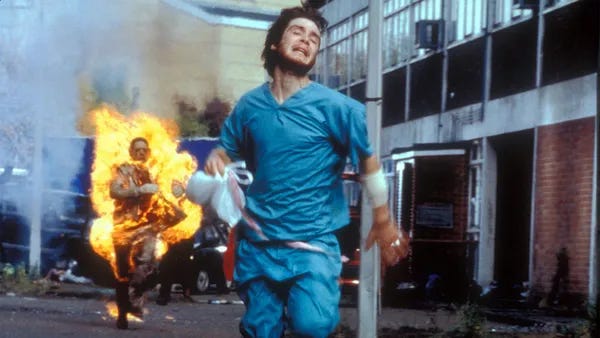
The universe of the “28…Later” franchise is plagued by the act of killing. An infection spreads across the British Isles, one that causes a rage so violent that the only motivation left in the body is that of bloodlust.
Characters kill and are killed in many gruesome ways. In the most recent installment especially, the violence is turned up to 11. Spines are torn from bodies. Skulls are cracked and brains are eaten. Innocents are flayed. However, Alex Garland differentiates his work from other aimless “blood and guts” genre films by coding it in a bleak realism.

The Bone Temple reveals that the ghastly Alpha was potentially cured of the virus. That the rage illness itself was a psychiatric problem; an anti-psychotic cocktail is enough to bring him back to docile lucidity. We enter his delusional mind: his human prey as monsters. A justified killing. He had been looming over the cast as a full human internally.
The implication is worrying: within the people we see tearing flesh from another and having their own flesh torn — screaming, raging, seeking pain — is a faculty, just like you or I have.
The illness — rather than leaving the actor in an unconscious, mindless state — was really a disinhibitor all along. The afflicted have cognition and reason that can be returned to. The potential that they have any agency to exert left, even if only a smidge, is chilling.
I can’t help but compare the series to other media with similar premises. The first that comes to mind is Garth Ennis’ Crossed franchise.
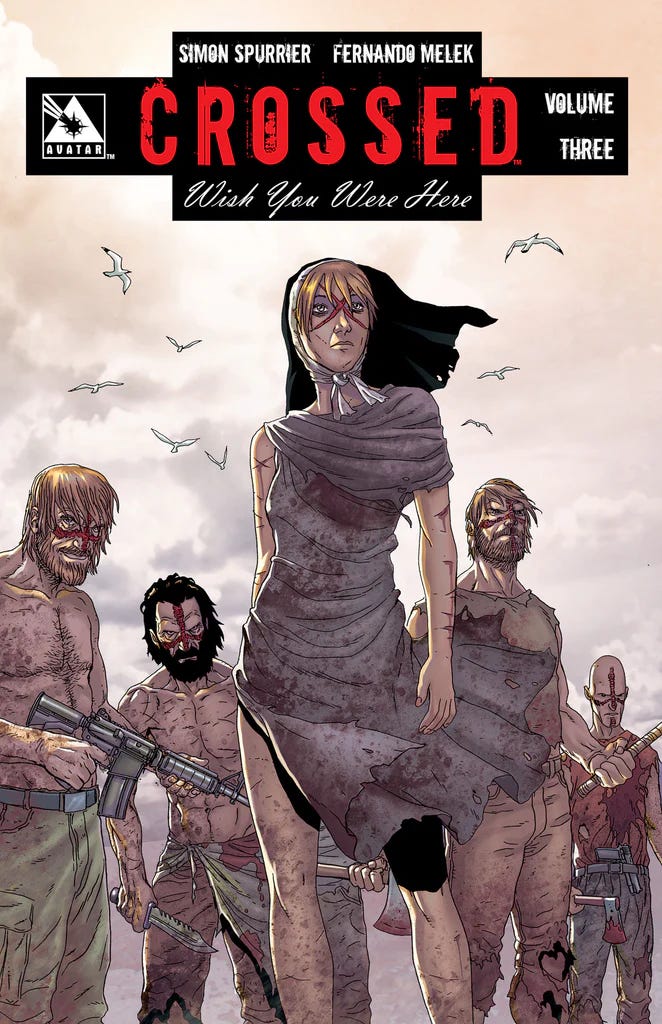
The thesis is similar — the suggestion that extreme violence exists as a suppressed potential within ordinary people. And that with a disinhibiting agent powerful enough — perhaps some unexplained disease — humanity can quickly be rendered to its most primal state. One that isn’t pretty.
Perhaps after all, even with all the liberal norms and civility structures we’ve built as a facade, humans are naturally wretched in their animalism.
The mechanics of the apocalypse are similar, though the titular Crossed are able to speak, assemble, drive, and use weapons. Bodily fluid spreads, incubation is quick, and violence is the modus operandi. Characters are done in by blood splatters, drips, spits, kisses, and sprays of urine. The lust isn’t just for blood though, in Ennis’ world, it is libidinal. The Crossed engage in acts of sexual violence so extreme that it cannot be described in polite writing. While horrifying, this becomes quite a magnificent problem.
Crossed is transgressive to the point of nauseating absurdity. Often, I feel that the franchise substitutes gratuitous violence for substance and obscures truly original and interesting premises. Within the various storylines, this is a major narrative issue. (It’s a bit of a skip!)
I am personally of the belief that gore should be the vehicle for horror, not the horror. The fear isn’t in the wanton violence itself, but what that violence implies about the world.
Si Spurrier on the other hand, completely corrects this issue in his web expansion of the original. Crossed: Wish You Were Here is excellent, and shifts the storytelling and worldbuilding drastically. A significant plot point is the infection of the main character’s former companion. She, a nun, pursues him relentlessly through the narrative. The restraint she exerted, in all aspects of her life, carries into her sickness. Her crossed form is unique in that it reads, it thinks, and it strategizes.
Across the work she fights herself against her affliction, restraining her bloodlust, to bring herself closer to her beloved – our protagonist. In this way, her character suffers too at her own hand. She is sovereign still, perhaps in a limited way, and she chooses even in her infected form.
Another anecdote in the story is that of an art teacher reflecting on the infection of a student she had an affair with pre-apocalypse. Hiding in the attic of the school, she would watch as he and his gang of crossed stalk the schoolgrounds.
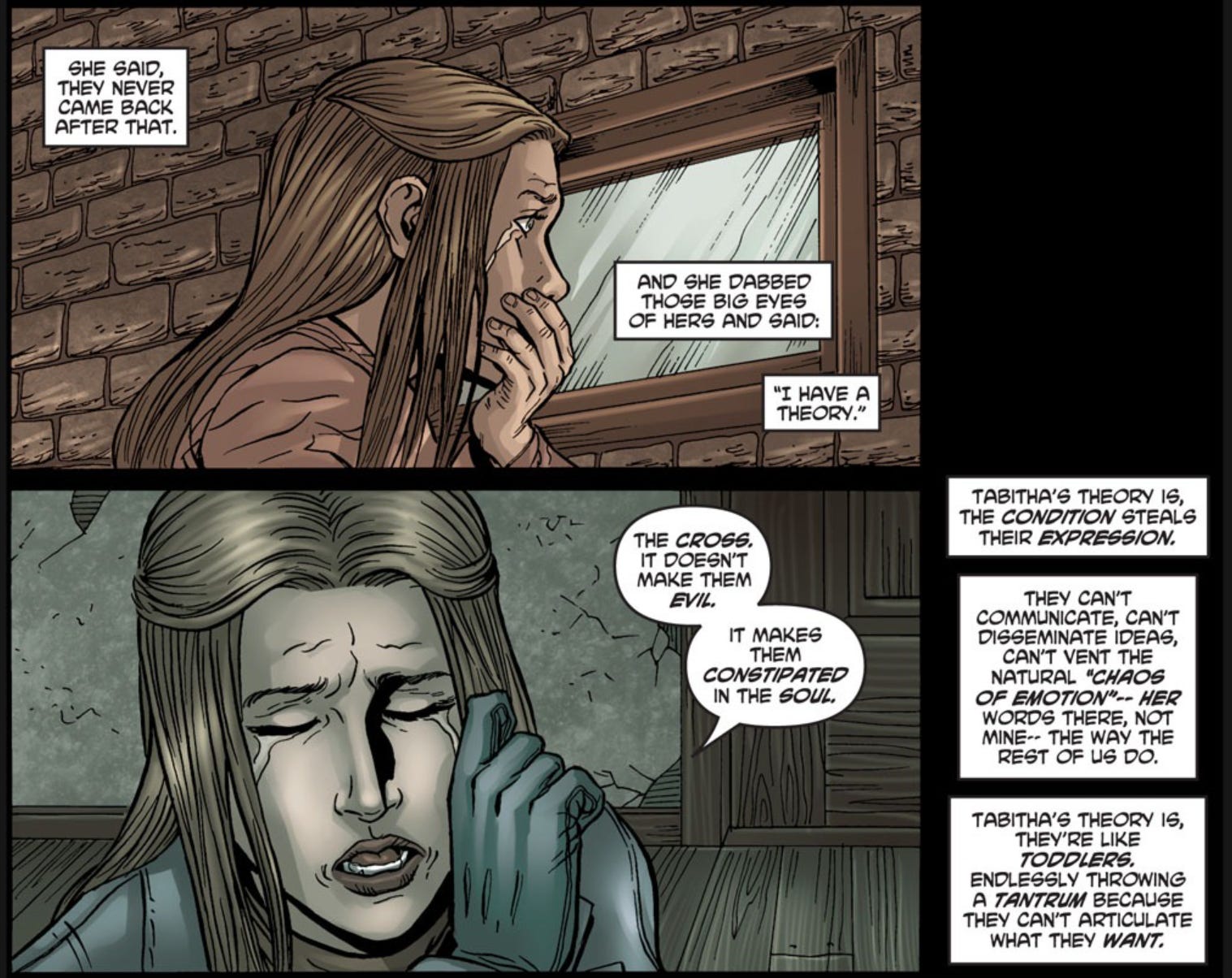
Late each night, she would sneak out and paint a portrait of her beloved on a wall. And each day he would come and stare at the image of himself. Slowly but surely he was woken from his stupor, the images remembering a him long lost. Eventually he was killed and eaten by his companions.
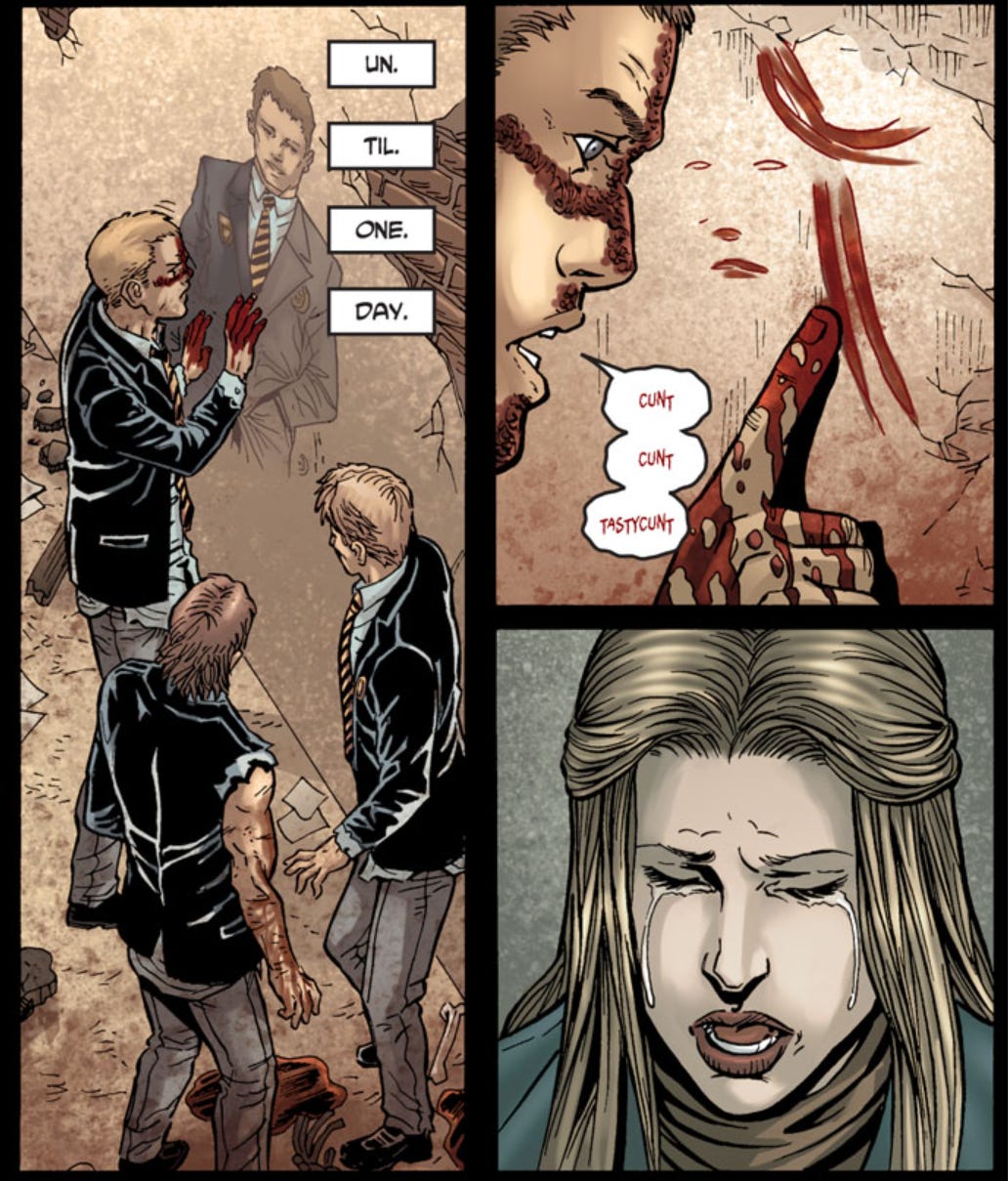
Crossed and 28 Years Later imply that its horrors retain some aspect of themselves. These are not zombie stories. These are not hordes of the undead. These are living, breathing people who have begun to kill. Better put, these properties are about pandemonium. A state where civil norms collapse, impulse motivates, and the human reverts to its most animal form.
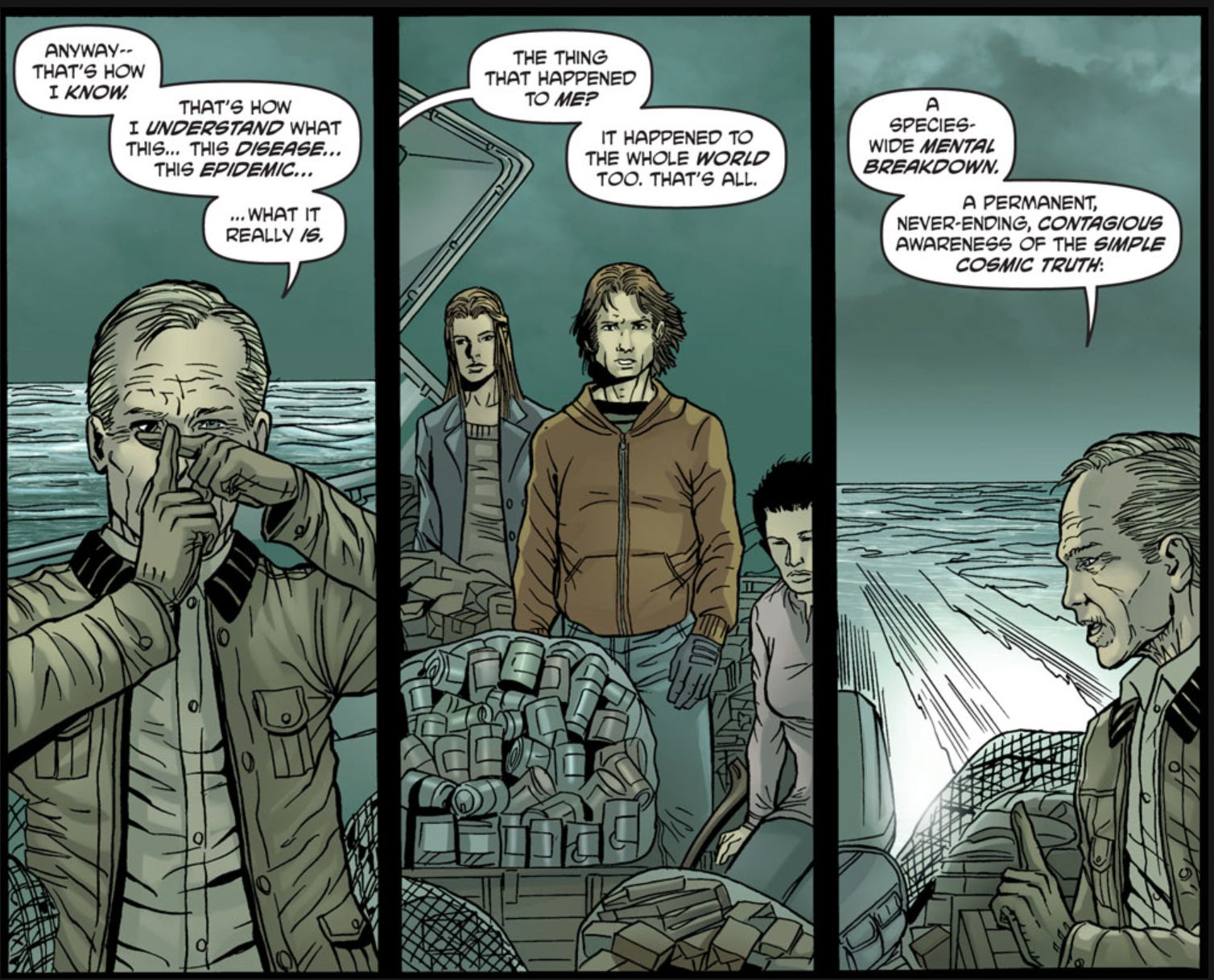
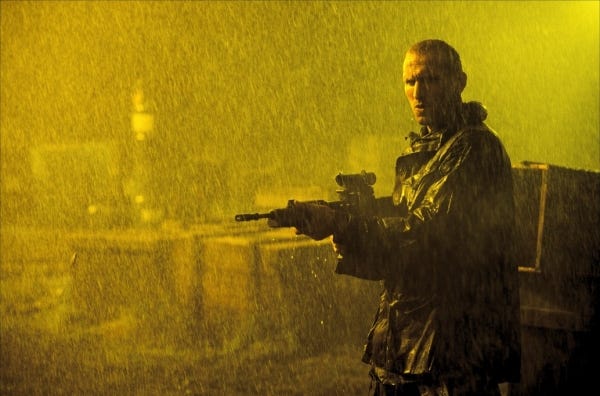
The uninfected humans of Crossed and “28…Later” are a nasty lot. In Crossed they rape and kill just like the rest. They sabotage others, themselves. Wish You Were Here features characters whose virulent racism survives apocalypse, those who choose power and control over the safety of others, and those who create a hierarchy of life-value solely based on utility. 28 Days Later has the military survivors – a short month or so into the apocalypse – immediately seeking sex slaves. They are willing to rape both women and children, and kill anyone in their way. Entitlement is framed as “future” and base libidinal impulse overrides morality immediately.
The Jimmies of 28 Years Later quite literally adorn themselves in the image of a terrible figure – Jimmy Saville, an infamous pedophile and necrophile whose depravity in his lifetime knew no bounds. The symbolism is clear: his namesakes engage in worse atrocities than the infected. For the infected, it appears as though there are three concrete goals in the behavior – the expression of rage, the satiation of hunger, and the spread of the infection.
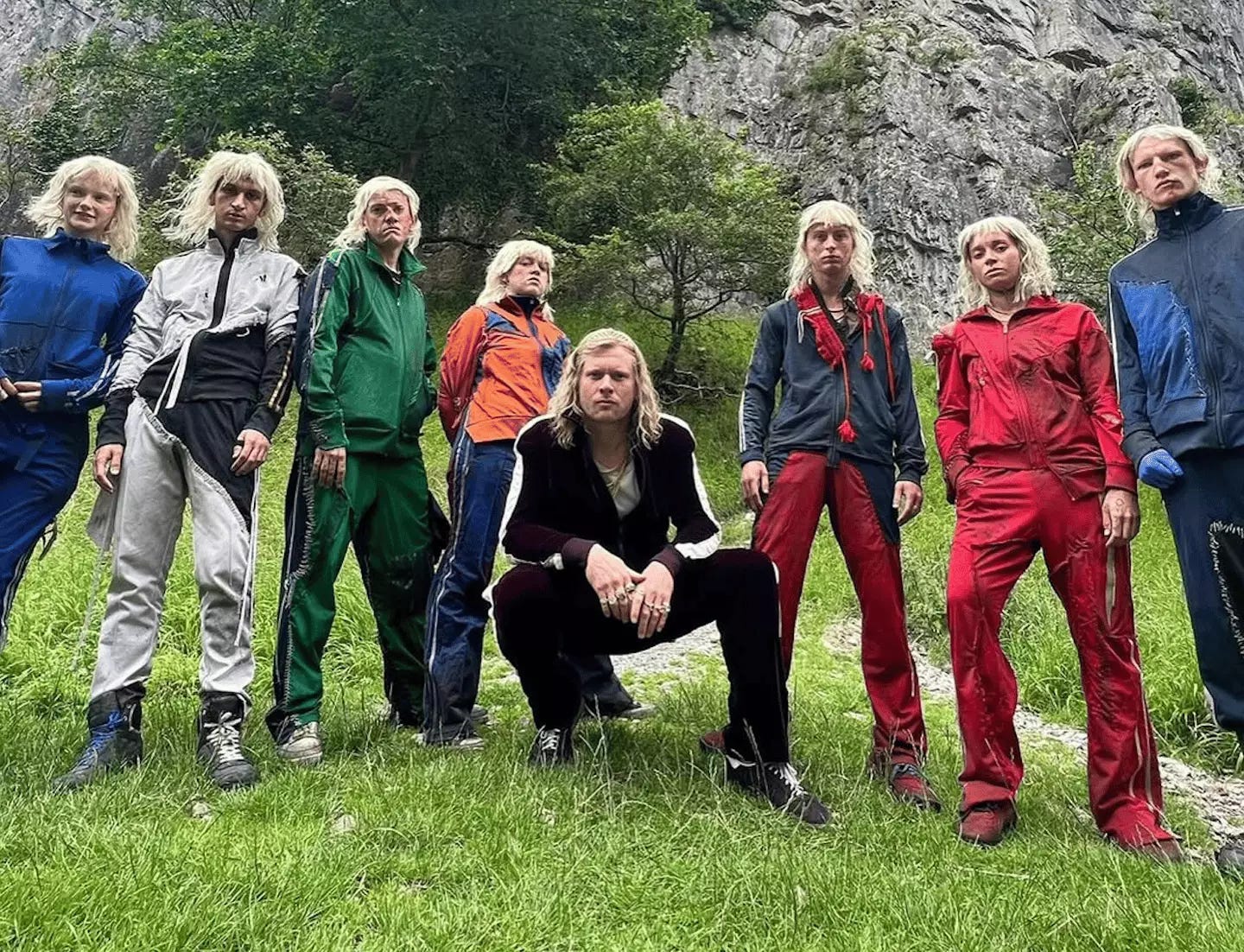
For these Jimmies, their only goal is to extract a maximum amount of pain from their victims in order to feed their God: Satan. Through the movie they kill the infected with incredible ease. The infected are no more than background dressing. Their “acts of charity” – shown in the movie as the flaying of innocents – are framed as a perverse christening ritual.
It makes one wonder – if the uninfected are this bad, who are the real horror?
The moral terror is clear: Ordinary people have the same capacity for violence. The simple truth is that most are inhibited, whether through adherence to civil norms, fear of consequence, or personal moral belief. And when those structures collapse, whether by illness or civilizational destruction, they are willing to engage in unimaginable atrocity.
Humans have demonstrated this capacity time and time again. History is full of these moments.
One might be familiar with the painting by Jan de Baen, The Corpses of the De Witt Brothers.1 In it, the public lynching of Johan and Cornelis de Witt is illustrated. During a period of great political upheaval in Holland, a mob of William of Orange’s supporters killed both brothers. In a sanctimonious rage, the brothers were shot and their bodies strung up by the feet on a public gibbet. Their livers were taken, roasted, and cannibalized. In their torture their fingers were removed, they were castrated, and their faces were flayed. Their hearts were taken as trophies.

The take-away from all of this is that their killers were simply ordinary citizens, aggrieved. Truly horrible.
One might wonder: what could possibly justify a killing this inhumane?
Civil norms often collapse in political crises. Many killers of the Cambodian genocide were ordinary civilians – often youth – radicalized and instrumentalized for the ends of the Khmer Rouge. The brutality doesn’t need description here. Same in Indonesia2 (though through opposite ideological impulse); I recommend The Act of Killing as a “watch-it-once” insight3.
The “class enemy” purges of the Maoist Revolution are often romanticized on the contemporary left as the “ordinary folk” rising up against inequality. Which yes, literally. Peasant-led violence killed entire generations. Land reform victims are estimated to be between 200,000 and into the millions depending on the source.4 Did the concentration of capital – the inequality – justify the severity of violence?
Another mass killing in a period of institutional collapse is the Rwandan Genocide. Civilian Hutus killed civilian Tutsis. Ordinary people ran through the streets, killing each other with machetes (or whatever weaponry available).5 This was bloodshed in total pandemonium, unlike the sterile, bureaucratic pogroms seen under the Nazis (in which, still, ordinary people signed orders6). Recent genocide acts committed in Myanmar against the Rohingyas were accelerated by social media.7 These anti-Rohingya echo chambers online motivated extreme cruelty – stabbings, shootings, rapes, and arsons.8
From the extremes of incredible poverty to the banality of a Facebook post, it is frightening to think of how flexibly the conditions for mass violence are created.
There are certainly specific mechanisms, one could argue – political, ideological, economic, historical – that catalyzed these killings. But rather than let the reflex for specificity take over, I want the lens to home in on the simple fact: normal people killed.
Do ordinary people really need some science-fiction catalyst to stoop to atrocity? Ideological justification upends moral norms. The Jimmies in 28 Years Later for example, operate with a moral system warped by religion. To support “Old Nick” is to do “good”, and to not partake is to do “bad”. Perhaps it’s better not to describe them as disinhibited, but that they are differently inhibited. This is closer to what we see in these ideologically justified historical pogroms. None of the Jimmies are unique. They were ordinary children radicalized and warped by extraordinary circumstances.
And I can’t help but think: What does it mean for an ordinary person to soil their hands with blood?
In their post-conflict conditions, many are stable nations. Though it’s haunting to imagine that walking through, say Rwanda9, you might cross paths with someone who has killed many others in a rampage. These genocides happened that recently. What was the cost for this stability?10 Killers and survivors live side by side, to rebuild society with what remains. There is no structural choice but to move on with their lives.
This is where the lasting horror of the 28 Years Later movie lies. If Samson is awoken by a bout of anti-psychotics, is he now lucid enough to understand what he’s done? Can he remember the people he’s killed – the people he’s cannibalized? It is terrifying to think of.
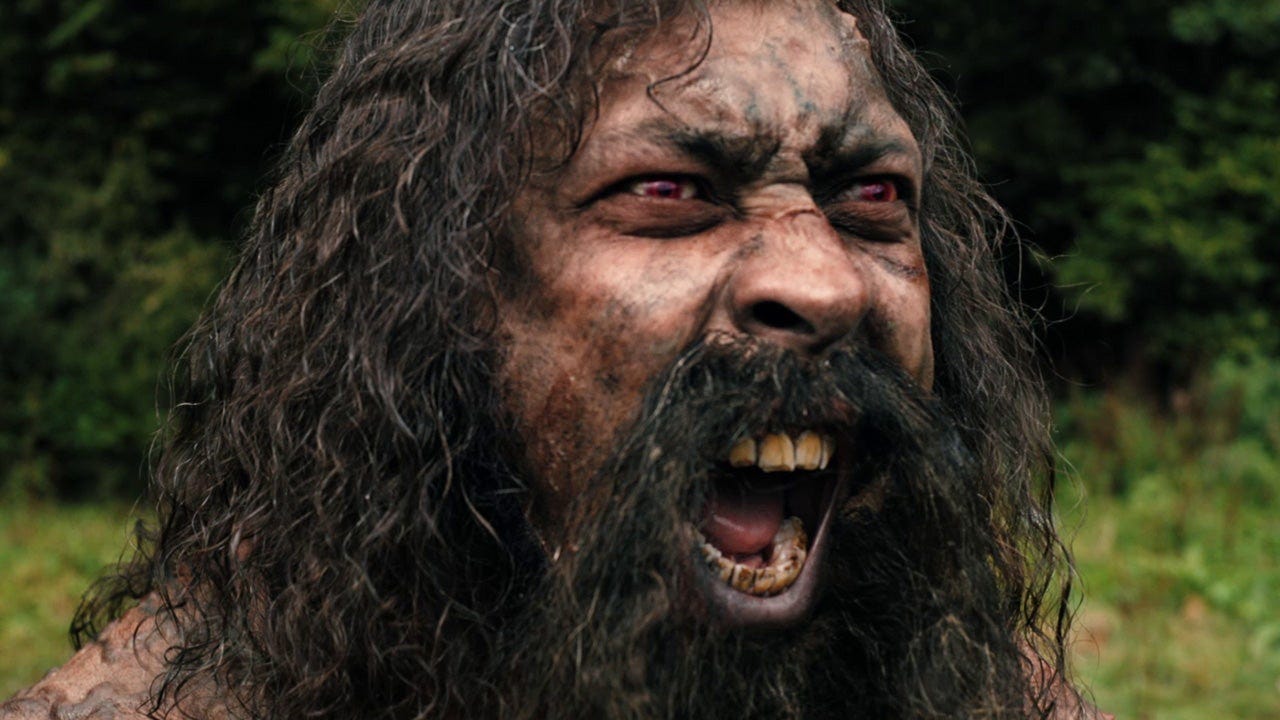
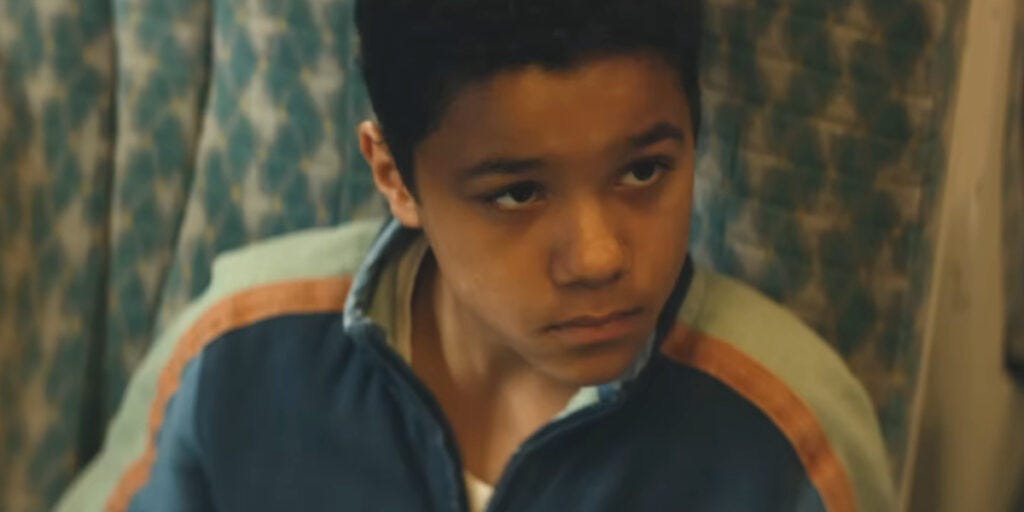
Infected characters sprint through the land, limbs broken, wounded, skulls fractured. It seems as though they have no perception of pain. Hypothetically – if in the next installment the whole British Isles are gassed with an aerosolized antipsychotics mixture, what would happen to them? Would they come to lucidity, finally perceiving the extent of their physical pain? Would they be able to handle the weight of the blood on their hands?
The potential for moral horror there is sharp. Will Garland be willing to go that far?
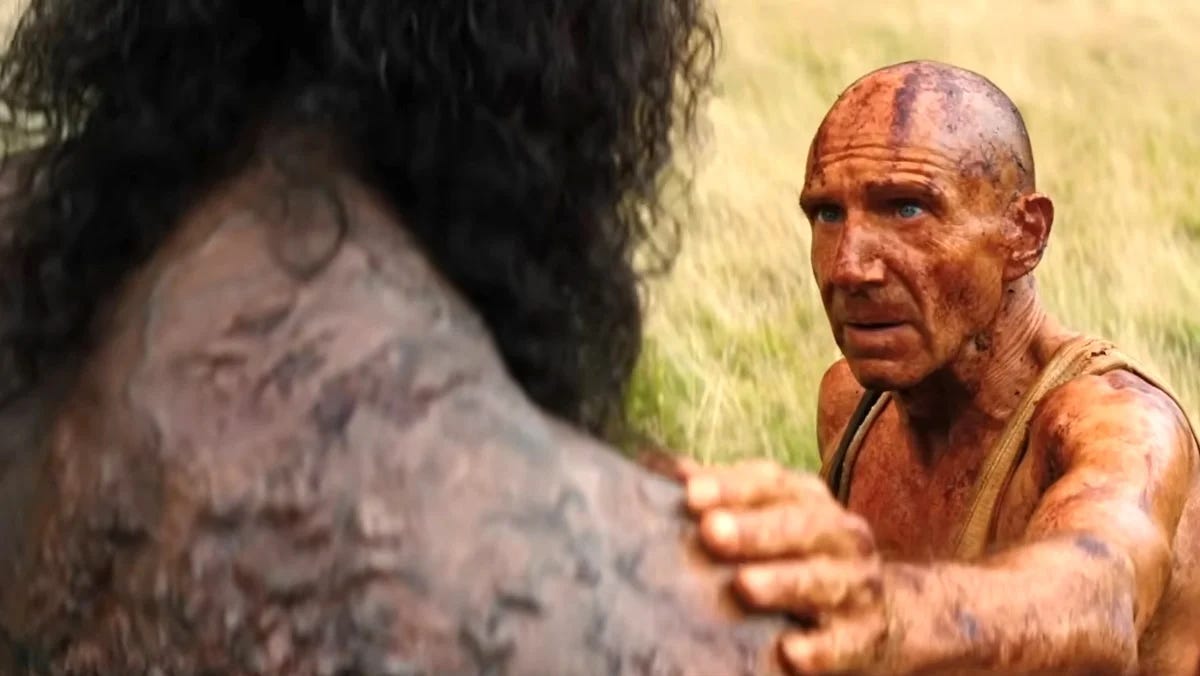
These questions poisoned the air while I sat in the theatre for 28 Years Later: The Bone Temple. The tension in the scenes with Samson and Dr. Kelson were severe enough that I gagged in a moment of total nervous system break — truly, an awesome piece of horror. A horror so persisting and inescapable because the fear isn’t that there are monsters out there.
The shock is that there aren’t.
Every man in my periphery – a threat. Every door left unchecked – a point of entry. Ordinary people, under certain conditions, may just be willing to tear us apart.
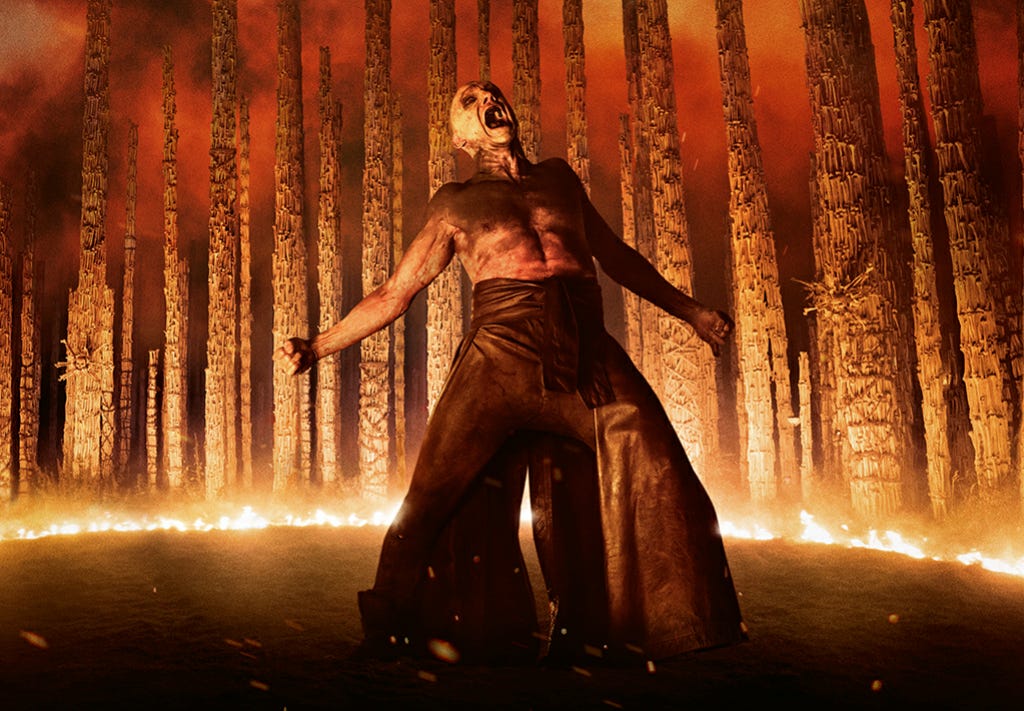
Pulled obviously from Arendt’s Eichmann in Jerusalem: A Report on the Banality of Evil (1963) — Normal bureaucrat at the decision-making forefront of the Holocaust.
Thanks for the essay, and for the recommendations. I had been trying to write a story with this same premise, because is what I believe will be the Apocalypse. It won't be real. It would be a massive psychosis cause by all the pain of modern life, from mostly the very repress bursting out without nothing to lose.
Is terrifying, but also, at least for me, so hard to explore because most stories end in situations where very rarely there is an after. If there is one thing I trust, no matter if it even happens as violent as the one in those stories, is that their will be an after and we, the human race, will move on.
Uff. Yeah. Good work. Try this on: I was just reading that, among the people "tied to" Jeffrey Epstein (prounounced with a long 'i' in German) is a woman who (with his help) became a top attorney for Goldman-Sachs. (!) So, it's not just this 'one guy';* it's an entire system/class of his "enablers," including DT and men on the Supreme Court and people running LA film studios, and on and on and on....
Among this woman/attorney's emails is one in which she tries to explain to her "Uncle Jeffrey" (no shit!) why his crimes with vulnerable/fragile underage girls were -- like, well, uh -- crimes. Like, against Humanity. ....