
Lily Allen: Oversharing as Art

I have a controversial opinion on infidelity. If you're under 25, I don't really care about it.
This is not me saying that it's fine to do. No, it's an extremely skeezy, gross, cruel thing to do to someone who has put their trust in you.
It's that I think that under 25, it *generally* has yet to have solidify into a permanent trait. From 18 to 25 people are going through major volatility: their education, career, housing, social networks are in a chronic state of uncertainty and change. Life turbulence spurs some of the biggest and most humiliatingly poor life choices.
Drinking too much at a party and throwing up everywhere? Yeah, you don't know your tolerance yet. Fumbling that beautiful girl you took on a date? Well yes, social skills are built not born. Cheating because you're self-absorbed and impulsive? Of course, you're living your early adulthood on diet narcissism.
It's not permissible but it's not surprising. Early adulthood immaturity is more manageable than long term character rot. I find it useful to think this way in a culture that moralizes aggressively: let's ask why people choose to do bad things. Freezing people in shame without evaluating the behavioral root prevents personal development, and contributes to a psychologically stunted society.
Generally, the consequences of cheating — the loss of a relationship, witnessing the suffering of your partner, public humilation— are enough for most people to get their heads on straight. This is a real thing: Jean Piaget talks about pre-conventional and post-conventional morality in human development.
Pre-conventional morality being when a child has their concept of morality dictated by external feedback (punishment or reprimand). Post-conventional morality being when a developed adult has their concept of morality dictated by internalized principle (your own code of conduct).
Looking at young adulthood as its own developmental period, it's reasonable to suggest that some still operate in that "pre-conventional" stage of relational ethics. That is how you end up with young adults who say cheating is wrong and then cheat anyway.
In American culture, infidelity is seen as a religious sin —human fallibility be damned. The media tells you this, your scripture tells you this, and your social circles will tell you this. When you are morally immature, you structure your sense of "right" and "wrong" in a relationship based on this external feedback. Some can develop internal principle from feedback alone, but many need to choose wrong and reap consequences to actually metabolize it.
If you are under 25 and have cheated on a partner, you have a responsibility to yourself and society to learn from your conduct. Are you avoidant? Anxious? Sex-addicted? Were you unhappy with your partner? Bored?
Get to the root of the problem, because your lack of good decision-making has harmed others. Breaking up with someone is less humiliating than being known as a cheat. Letting a propensity to betray evolve into character damage will ruin your life. You're like a kid who learns a stove is hot by burning himself on it: you need to grow up.
That is to say, all of this intends to prime my greater thesis: if you are well over 25 and cheating, it's fair to assume that the cheating is actually the least of your problems.
What spurred this thinking was Lily Allen's recent album, West End Girl.
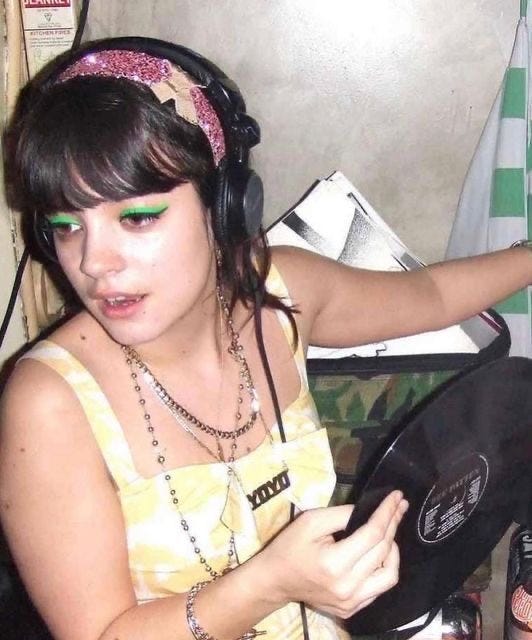
If you don't know her, just know that she is the progenitor of what I call "trauma dump pop". Think, Taylor Swift or Olivia Rodrigo — the pop girlies that use their lyricism as confessional, with every morbid detail of their private relationships being squeezed for maximum commercial value. Lily Allen is their older, drug-addled Aunty.

I liked Alright, Still enough —Smile has fantastic production. So I was pleasantly surprised when I heard that Lily Allen was releasing an album for the first time in nearly a decade. West End Girl, unfortunately, is actually quite unpleasant to listen to and the lyrics are excruciatingly awkward. As with all forms of "trauma dump pop", the salaciousness of excess disclosure is the selling point. Musicality doesn't matter to the audience —it's a TMZ article with backing vocals.
The entire album is a painful story about her failed relationship with actor David Harbour. How he convinced her, at age 50, that he NEEDED an open relationship. How she agreed to make him happy, and how the obvious catastrophe waiting to happen happened. The post-Swiftian music market confuses this sort of pained exhibitionism with authenticity, so naturally West End Girl is now trending.
The music and the story are both really difficult to listen to. I feel gaslit by the music journos celebrating this release.
David Harbour is a perfect example of someone whose cheating is truly the least of their problems. This man, going by Lily's excessive oversharing, and his own admission, is an addict.
Harbour has publicly and proudly talked about his recovery from alcohol addiction. He described it as making him a terrible human being, and that he worked to recover from it. An honorable thing for sure.
Often, however, many addicts actually just swap from one addiction to another. This transference is usually to a more socially acceptable compulsion.
Drug addicts will jump to work addiction (workaholism). Alcohol addicts will jump to sex addiction (David Harbour's case). Anorexics—a different pathology but still rooted in addiction— will swap to bodybuilding or something else that enables "orthorexia" (a more socially acceptable form of restriction).
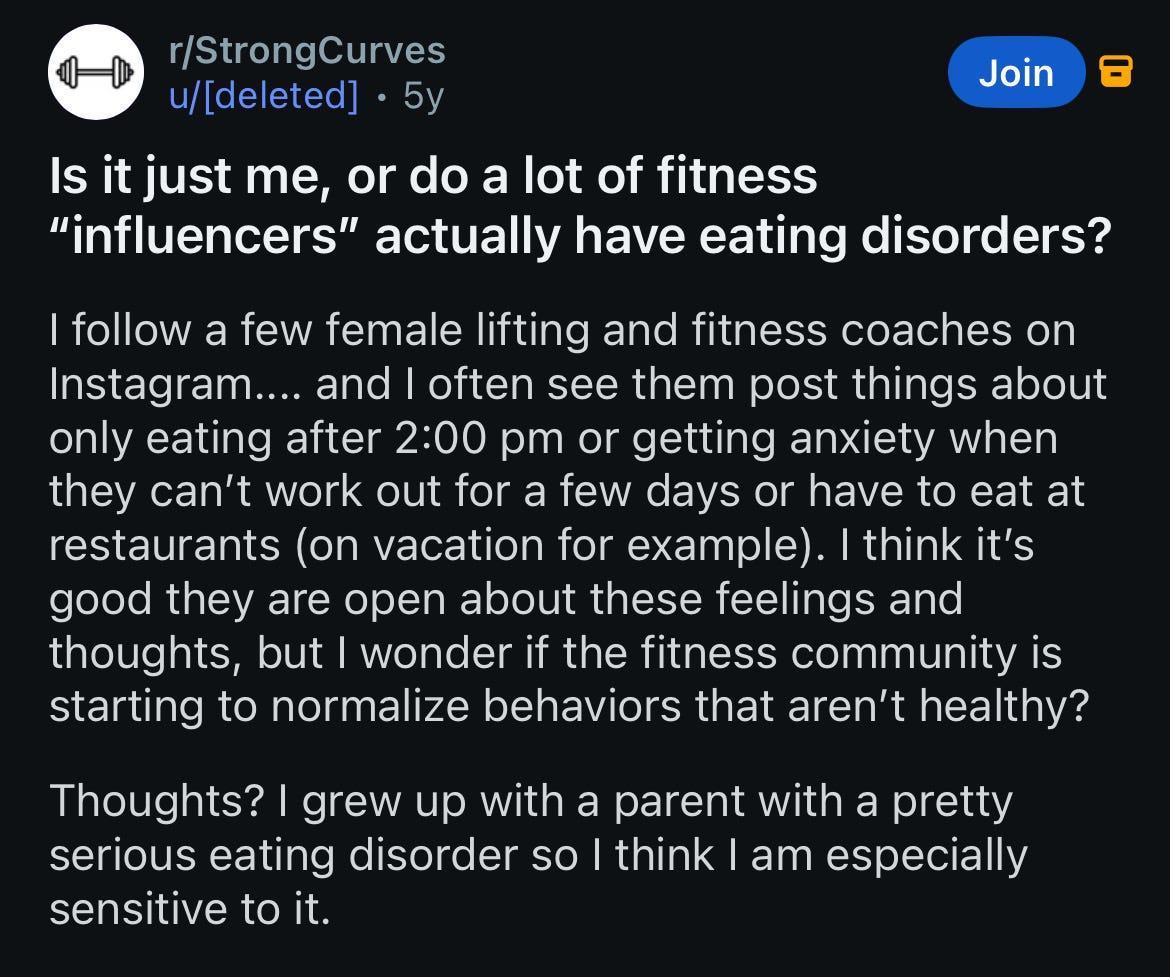
Society will cheer on your sobriety while ignoring your overwork, compulsive need for sex, or codependent relationships. This is the insidious nature of vapid therapy-culture and self-development used as reputation: what looks like reinvention is really just compensation.
An open marriage at his big age is not experimentation or sex-positive liberation. It's recreating the dopamine cycle that alcohol once provided. Many addicts drop the substance but don't develop the emotional regulation and self-auditing skills that the substance was used to avoid.
Allen, in her music, literally describes Harbour's increasing insecurity as she finds career success in the theatre-world.
His weird "open relationship" demand looks like a cope for status loss in the marriage.
No one wants to be the 50 year old on hook up apps "figuring life out". I don't get why someone would willingly choose this behavior. I'm certainly not a traditionalist: if you want casual relationships and de-emphasized romance into midlife then have at it.
But this guy had a loving wife and kids at home, so clearly he was trying to have his cake and eat it too. This speaks to some entrenched dysfunction in him that is getting lost in the sensationalist sauce. We are seeing external repair of his alcoholism without the internal repair that would regulate his need for unhealthy coping mechanisms.
The pop media cycle loves the "OMG HE CHEATED MEN ARE TRASH" narrative. It sells well and incites discourse-driving secondhand anger in women. The reality of cheating in midlife is less exciting and more pathetic. These people are frankly too old for this.
Anyone I have known that has had affairs into their "adult-adult" life, has had some kind of bizarre, fucked up personal problem that they were using the affair to escape from. It is very rarely the same situation as the 23 year old with bad sexual discipline and low emotional intelligence.
Whatever problem you've avoided into midlife has calcified into near-permanent dysfunction. Sorry to be cynical but it IS hard to teach an old dog new tricks. Not in impossible, but definitely hard. You should nip major psychological problems in the bud before you end up with real responsibilies like a family or shared assets. Things you can't afford to lose.
By 50, his infidelity is not an act of immaturity but of arrested development. Cheating was a developmental diagnostic and he failed very publicly.
Emily Montes-core